Making sense of your pet's appearance
You know your pet's adorable. But do you know why? Wisdom Panel's traits tests identify the genetic variants responsible for things like their floppy ears or shimmery coat color. But that's just the beginning.

Why traits matter
Why traits matter
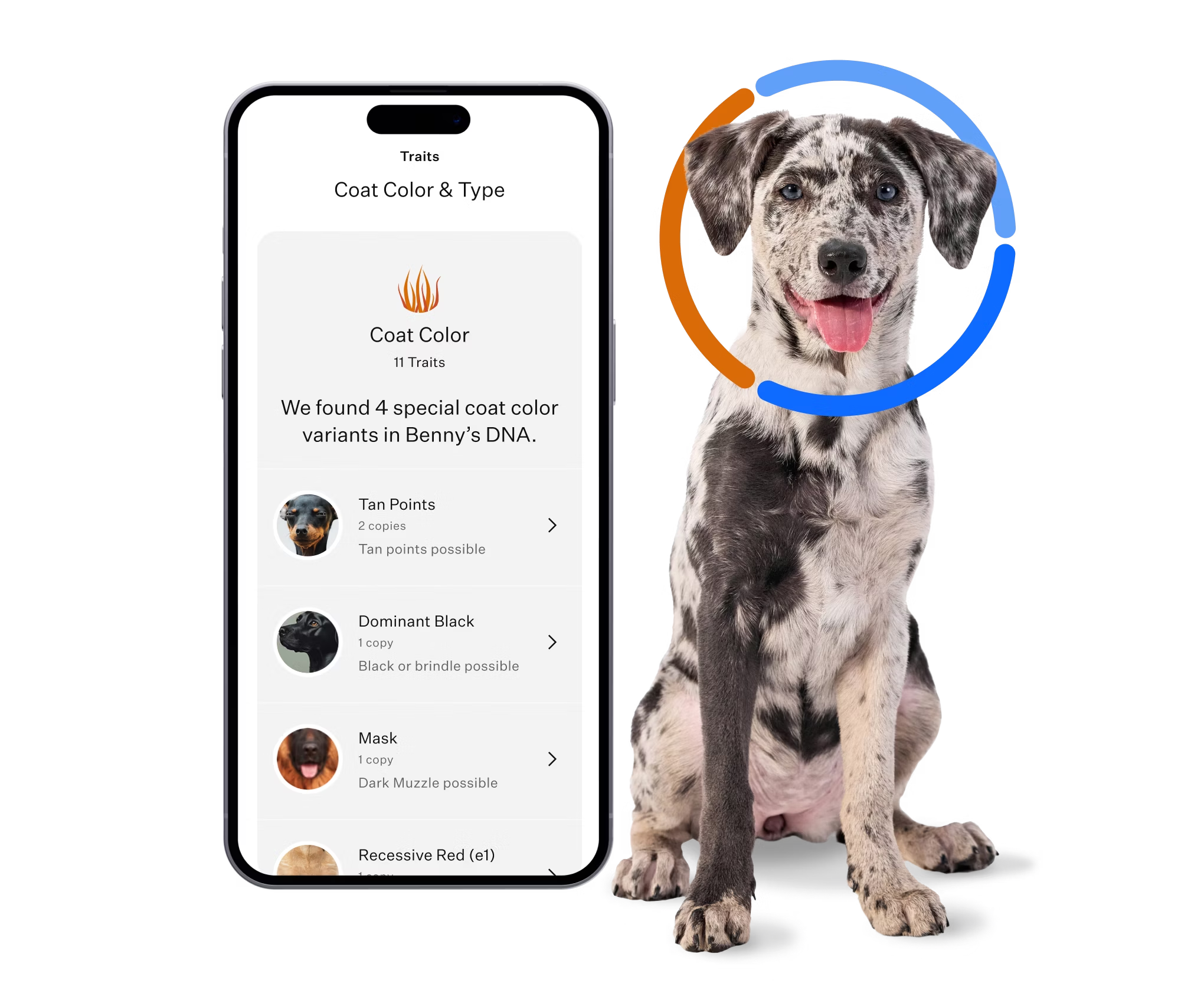
Your pet’s traits give them their one-of-a-kind appearance. But they also give you intel you can use as a pet parent. That’s because the more you understand about your pet’s features — like their wiry coat or the potential health implications of their short legs — the better you can tailor their grooming and everyday care.
Your pet's traits give them their one-of-a-kind appearance. But they also give you intel you can use as a pet parent. That's because the more you understand about your pet's features — like their wiry coat or the potential health implications of their short legs — the better you can tailor their grooming and everyday care.
Demystify your dog's appearance with 50+ trait tests.
Albino
The Albino variant tested causes a complete inability to produce pigment (albinism). The variant is located in the SLC45A2 gene.
Back Muscle and Bulk
The Back Muscle and Bulk variant is associated with increased back muscle and fat. The variant is located in the ACSL4 gene.
Blue Eyes (Discovered in the Siberian Husky)
The Blue Eyes variant is associated with blue eyes and heterochromia, which is when the eyes are two different colors, and is located in the ALX4 gene.
Chocolate (basd)
Chocolate color discovered in the Australian Shepherd, also known as "basd," is a variant found in the TYRP1 gene, known as the B locus. This variant is associated with a dog’s darkest color pigment being limited to brown instead of black. Meaning all dark hair, nails and skin (including eye rims, nose and paw pads) will be a shade of brown or chocolate. It was previously reported as Chocolate (Variant 4).
Chocolate (bc)
This chocolate color variant, also known as “bc”, is associated with a dog’s darkest color pigment being limited to brown instead of black. Meaning all dark hair, nails and skin (including eye rims, nose and paw pads) will be a shade of brown or chocolate. This variant is found in the TYRP1 gene, known as the B locus. It was previously reported as Chocolate (Variant 1).
Chocolate (bd)
This chocolate color variant, also known as “bd”, is associated with a dog’s darkest color pigment being limited to brown instead of black. Meaning all dark hair, nails and skin (including eye rims, nose and paw pads) will be a shade of brown or chocolate. This variant is found in the TYRP1 gene, known as the B locus. It was previously reported as Chocolate (Variant 3).
Chocolate (be)
Chocolate color discovered in the Lancashire Heeler, also known as "be," is a variant found in the TYRP1 gene, known as the B locus. This variant is associated with a dog’s darkest color pigment being limited to brown instead of black. Meaning all dark hair, nails and skin (including eye rims, nose and paw pads) will be a shade of brown or chocolate. Eye color is also affected, and is typically gold or amber.
Chocolate (bh)
Chocolate color discovered in the Siberian Husky, also known as "bh," is a variant found in the TYRP1 gene, known as the B locus. This variant is associated with a dog’s darkest color pigment being limited to brown instead of black. Meaning all dark hair, nails and skin (including eye rims, nose and paw pads) will be a shade of brown or chocolate. Eye color is also affected, and is typically gold or amber.
Chocolate (bs)
This chocolate color variant, also known as “bs”, is associated with a dog’s darkest color pigment being limited to brown instead of black. Meaning all dark hair, nails and skin (including eye rims, nose and paw pads) will be a shade of brown or chocolate. This variant is found in the TYRP1 gene, known as the B locus. It was previously reported as Chocolate (Variant 2).
Cocoa (Discovered in the French Bulldog)
Cocoa, discovered in the French Bulldog, is a variant found in the HPS3 gene and is scientifically known as "co." Cocoa is associated with a dark brown coat coloration and dark amber eyes in French Bulldogs. Notably, all other known chocolate variants are found in the TYRP1 gene (B locus) and are associated with a lighter brown coat and amber eyes.
Curly Coat
The Curly Coat variant causes a curly coat type and is located in the KRT71 gene.
Dilution (d1) Linkage test
The Dilution variant “d1” causes a lightening or dilution of pigment, especially dark pigments (eumelanin). Dilute black pigment appears grey, and dilute chocolate pigment appears isabella (a creamy brown). Red or yellow pigment (phaeomelanin) may show mild lightening of color. The d1 variant is found in the MLPH gene, known as the D locus. It was previously reported as Dilution (Variant 1).
Dilution (d2)
The Dilution variant “d2” causes a lightening or dilution of pigment, especially dark pigments (eumelanin). Dilute black pigment appears grey, and dilute chocolate pigment appears isabella (a creamy brown). Red or yellow pigment (phaeomelanin) may show mild lightening of color. The d2 variant is found in the MLPH gene, known as the D locus. It was previously reported as Dilution (Variant 2).
Dilution (d3)
The Dilution variant “d3” causes a lightening or dilution of pigment, especially dark pigments (eumelanin). Dilute black pigment appears grey, and dilute chocolate pigment appears isabella (a creamy brown). Red or yellow pigment (phaeomelanin) may show mild lightening of color. The d3 variant is found in the MLPH gene, known as the D locus. It was previously reported as Dilution (Variant 3).
Dominant Black
The Dominant Black variant is responsible for black and brindle coat colors. The Dominant Black variant is also known as KB (or Kbr if brindle), and is found in the CBD103 gene (known as the K locus).
Fawn
The Fawn variant is one of the most common red coat patterns, and is responsible for a coat with a red base, and dark-tipped hairs, often darkest over the forehead, ears, spine and tail. Fawn (also denoted as "ay") is found in the ASIP gene (known as the A locus).
Floppy Ears
The Floppy Ears variant is associated with ears that fold due to decreased cartilage stiffness. The variant is located in the MSRB3 gene.
Furnishings
The Furnishings variant causes a fuzzy beard, moustache and eyebrows, and is located in the RSPO2 gene.
Hair Ridge
The Hair Ridge variant causes an unusual permanent ridge of hair which will run down the dog's spine. The Hair Ridge variant is a duplication of the FGF3, FGF4, FGF19 and ORAOV1 genes.
Hairlessness (Discovered in the American Hairless Terrier)
The Hairlessness (Discovered in the American Hairless Terrier) variant causes dogs to have little or no hair, and is located in the SGK3 gene.
Hairlessness (Discovered in the Chinese Crested Dog) Linkage test
The Hairlessness (Discovered in the Chinese Crested Dog) variant causes dogs to have little or no hair, and is located in the FOXI3 gene.
Hairlessness (Discovered in the Scottish Deerhound)
The Hairlessness (Discovered in the Scottish Deerhound) variant causes a dog to have little or no hair, and is located in the SGK3 gene.
Harlequin
The Harlequin variant results in a distinctive pattern of spots of color on a white coat background, but only when the merle variant is also present. The Harlequin variant is found in the PSMB7 gene (known as the H locus).
High Altitude Adaptation
The High Altitude Adaptation variant is associated with an adaptation to living at high altitudes. The variant is located in the EPAS1 gene.
Hind Dewclaws (Discovered in Asian breeds)
The Hind Dewclaws (Discovered in Asian breeds) variant may result in the presence of hind dewclaws, which actually have no function! The variant is also known as DC-1, and is located in the LMBR1 gene.
Hind Dewclaws (Discovered in Western breeds)
The Hind Dewclaws (Discovered in Western breeds) variant may result in the presence of hind dewclaws, which actually have no function! The variant is also known as DC-2, and is located in the LMBR1 gene.
Long Hair (lh1)
The Long Hair variant "lh1" causes long hair in dogs and is located in the FGF5 gene. It was previously reported as Long Hair (Variant 1).
Long Hair (lh2)
The Long Hair variant "lh2" causes long hair in dogs and is the c.556del variant located in the FGF5 gene. It was previously reported as Long Hair (Variant 2).
Long Hair (lh3)
The Long Hair variant "lh3" causes long hair in dogs and is the c.559dup variant located in the FGF5 gene. It was previously reported as Long Hair (Variant 3).
Long Hair (lh4)
The Long Hair variant "lh4" causes long hair in dogs and is the c.578C>T variant located in the FGF5 gene. It was previously reported as Long Hair (Variant 4).
Long Hair (lh5)
The Long Hair variant "lh5" causes long hair in dogs and is located at position chr32:g.4517257T>A in the FGF5 gene. It was previously reported as Long Hair (Variant 5).
Mask
The Mask variant causes dark facial hair, mainly over the dog's muzzle, which looks a bit like a mask. The Mask variant is also known as Em and is found in the MC1R gene (known as the E locus).
Merle
The Merle variant causes a patchy coat pattern common in many herding breeds. Each dog's pattern is unique. On a black dog, areas of black and silver will be seen, or on a chocolate dog, areas of brown and beige. It can occur in combination with many other coat patterns, and can cause blue eyes or a fully or partly pink nose. The Merle variant is found in the PMEL gene (known as the M locus).
Piebald
The Piebald variant causes white spotting, patches and/ or a completely white coat. It can also cause blue eyes, pink or "butterfly" nose, pink eye rims, white toenails and pink paw pads. The Piebald variant, also known as "sp" (for spotting), is found in the MITF gene (known as the S locus).
Recessive Black
The Recessive Black variant is a rare cause of black coat color. The Recessive Black variant, also known as the "a" variant, is found in the ASIP gene (known as the A locus).
Recessive Red (e1)
The Recessive Red variant causes only shades of red (phaeomelanin) pigment to be displayed in a dog’s coat, ranging from a deep red, to orange, yellow or even white. This variant is also known as the "e1" variant and is found in the MC1R gene, known as the E locus. It was previously reported as Recessive Red (Variant 1).
Recessive Red (e2)
The Recessive Red variant causes only shades of red (phaeomelanin) pigment to be displayed in a dog’s coat, ranging from a deep red, to orange, yellow or even white. This variant is also known as the "e2" variant and is found in the MC1R gene, known as the E locus. It was previously reported as Recessive Red (Variant 2).
Recessive Red (e3)
The Recessive Red variant causes only shades of red (phaeomelanin) pigment to be displayed in a dog’s coat, ranging from a deep red, to orange, yellow or even white. This variant is also known as the "e3" variant and is found in the MC1R gene, known as the E locus. It was previously reported as Recessive Red (Variant 3).
Red Intensity
The Red Intensity variant causes a decrease in red (phaeomelanin) pigment concentration in the coat. Phaeomelanin is the pigment responsible for red, yellow, and pale cream coat colors. The Red Intensity variant is found in the MFSD12 gene (also known as I or Intensity locus).
Reduced Shedding
The Reduced Shedding variant is associated with a decreased tendency for a dog to shed hair. The variant is located in the MC5R gene.
Roan Linkage Test
Roan patterning is caused by an intermingling of white and pigmented hairs, with the pigmented hair color matching the base color of the coat in that area if white was not present. Roan may occur with or without small spots of solid color, called ticking. Roaning is common in certain breeds such as the Australian Cattle Dog and German Shorthaired Pointer. The Wisdom test for roan patterning is what is known as a linkage test. It does not directly test for the roan-associated variant but provides a prediction based on nearby proprietary marker(s) in the DNA. The test therefore gives an indicator of genetic status for this trait.
Sable (Discovered in the Cocker Spaniel)
The sable coloration discovered in the English Cocker Spaniel, scientifically known as "eH", is associated with dark hair on the dog appearing lighter in shade and partial red coloring in the paler areas of the coat. Sable color in Cocker Spaniels is a rare variant found in the MC1R gene, known as the E locus. It is a separate variant than the more common A locus sable, also known as fawn, that is found in many breeds and scientifically denoted as “ay”.
Saddle Tan
The Saddle Tan variant is responsible for a red color pattern with a dark-haired saddle over the back. The variant is located in the RALY gene.
Short Legs (Chondrodysplasia, CDPA)
The Short Legs (CDPA) variant is associated with short legs due to chondrodysplasia. The variant is an insertion of an FGF4 gene on chromosome 18.
Short Legs (Chondrodystrophy, CDDY)
The Short Legs (Chondrodystrophy, CDDY) variant is associated with shortened legs secondary to skeletal dysplasia which affects the development of cartilage and bone growth. The variant is an insertion of an FGF4 gene on chromosome 12. There is another common Short Legs variant that occurs on chromosome 18, called breed-defining chondrodysplasia (CDPA), which has a greater effect on leg length. While the CDDY variant has a less pronounced effect on stature, it is associated with an increased risk for abnormal early degeneration of intervertebral discs in the spine.
Short Snout (BMP3 variant)
Short Snout (BMP3 variant) has been shown to cause shortening of the head and snout. The variant is found in the BMP3 gene. It was previously reported as Short Snout (Variant 2).
Short Snout (SMOC2 variant)
Short Snout (SMOC2 variant) causes snout shortening, and actually accounts for 36% of the variation seen in dog muzzle length. The variant is found in the SMOC2 gene. It was previously reported as Short Snout (Variant 1).
Short Tail
The Short Tail variant is associated with a naturally short "bobbed" tail. The variant is located in the T-box gene.
Tan Points
The Tan Points variant is responsible for a distinct symmetrical pattern of tan and dark pigment, with tan markings on the eyebrow, cheeks, chest and lower legs. This variant is also required for a saddle tan pattern to occur.
Widow's Peak (Discovered in Ancient dogs)
The Widow's peak variant (also known as Ancient Red) causes an increase in the ratio of red (phaeomelanin) to dark pigment (eumelanin) in the coat when expressed. The variant is also known as the eA variant and is found in the MC1R gene (known as the E locus).
Widow's Peak (Discovered in the Afghan Hound and Saluki)
The Widow's Peak (Discovered in the Afghan Hound and Saluki) is also known as the Grizzle variant. It is responsible for a blended effect of light and dark hair, with the lower part of the body appearing lighter than the top. Other names for this variant include eG and Domino, and it is found in the MC1R gene (known as the E locus), and is a rare trait.
Demystify your cat's appearance with 25+ trait tests.
Albinism (Discovered in Oriental breeds)
The Albino (Discovered in Oriental breeds) variant results in white fur, a pink nose, and pale blue eyes.
Amber (Discovered in the Norwegian Forest Cat)
The Amber variant results in a rare golden coat color called amber which was first discovered in Norwegian Forest Cats.
Charcoal (Discovered in the Bengal)
The Charcoal pattern presents as a dark face mask with a darkly shaded stripe on the back known as a dorsal stripe or "cape."
Chocolate
The Chocolate variant results in medium to dark brown or chocolate colored hair instead of black hair.
Cinnamon
The Cinnamon variant results in light brown or cinnamon colored hair instead of black or brown hair.
Colorpoint (Discovered in the Burmese)
The Colorpoint (Discovered in the Burmese) variant causes temperature-sensitive pigment production at the extremities or "points" (face, ears, feet and tail).
Colorpoint (Discovered in the Siamese)
The Colorpoint (Discovered in the Siamese) variant causes temperature-sensitive pigment production at the extremities or "points" (face, ears, feet and tail).
Dilution
The Dilution variant causes a lightening of coat color pigments. Black pigment is diluted to blue, chocolate to lilac, cinnamon to fawn and red to cream.
Glitter
The Glitter variant results in a softened hair texture and gives an iridescent sheen to the coat.
Hairlessness (Discovered in the Sphynx)
The Hairlessness (Discovered in the Sphynx) variant causes a cat to have little or no hair.
Long Hair (Discovered in many breeds)
The Long Hair (Discovered in many breeds) variant is one of four variants known to cause long hair in cats.
Long Hair (Discovered in the Norwegian Forest Cat)
The Long Hair (Discovered in the Norwegian Forest Cat) variant is one of four variants known to cause long hair in cats.
Long Hair (Discovered in the Ragdoll and Maine Coon)
The Long Hair (Discovered in the Ragdoll and Maine Coon) variant is one of four variants known to cause long hair in cats.
Long Hair (Discovered in the Ragdoll)
The Long Hair (Discovered in the Ragdoll) variant is one of four variants known to cause long hair in cats.
Lykoi Coat (Variant 1)
Lykoi Coat (Variant 1) is one of the variants known to result in the sparse coat of the Lykoi cat.
Lykoi Coat (Variant 2)
Lykoi Coat (Variant 2) is one of the variants known to result in the sparse coat of the Lykoi cat.
Mocha (Discovered in the Burmese)
The Mocha variant reduces dark pigment levels resulting in a lighter colored coat, aqua eyes, and a pink nose and paw pads.
Partial and Full White
The Partial and Full White variants can result in a partial white (bicolor) or full white appearance, depending on the length of variant inherited.
Polydactyly (Variant 1)
Polydactyly (Variant 1) may result in extra toes on either the front or all four feet.
Polydactyly (Variant 2)
Polydactyly (Variant 2) may result in extra toes on all four feet.
Polydactyly (Variant 3)
Polydactyly (Variant 3) may result in extra toes on all four feet.
Rexing (Discovered in the Cornish Rex and German Rex)
The Rexing (Discovered in the Cornish Rex and German Rex) variant is one of the variants that results in a curly coat in cats.
Rexing (Discovered in the Devon Rex)
The Rexing (Discovered in the Devon Rex) variant is one of the variants that results in a curly coat in cats.
Russet (Discovered in the Burmese)
The Russet variant results in a gradual color change from brown tabby to red as the cat ages.
Short Tail (Variant 1)
Short Tail (Variant 1) is associated with a naturally short "bobbed" tail and was first discovered in Manx cats.
Short Tail (Variant 2)
Short Tail (Variant 2) is associated with a naturally short "bobbed" tail and was first discovered in Manx cats.
Short Tail (Variant 3)
Short Tail (Variant 3) results in a shortened tail with kinks or angles and was first discovered in Japanese Bobtail cats.
Solid Color
The Solid Color variant results in solid coloring of the hair shaft and is also known as Non-agouti.
Types of traits
Types of traits
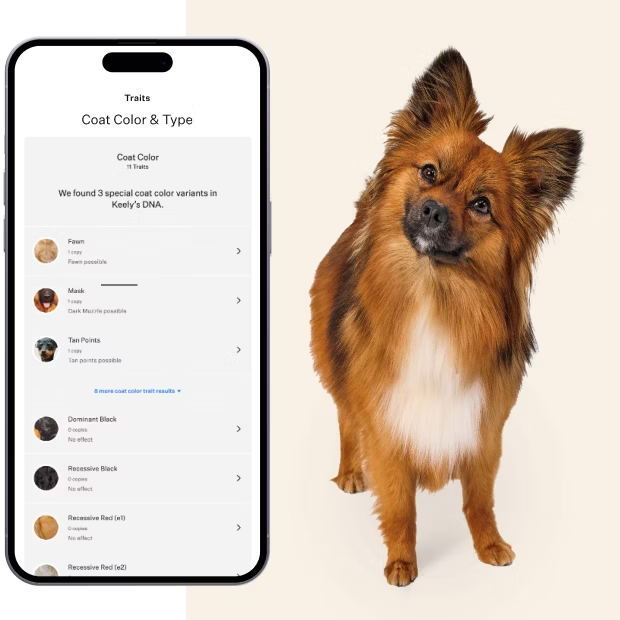
Wisdom Panel’s trait tests are broken out into three different categories that demystify your pet’s physical appearance. Coat characteristics: From coat length and furnishings to coat pattern and colors, this section is all about fur. Weight: Learn the ideal weight range for your adult dog. Body features: Get a detailed breakdown on head shape, ear shape, eye color and more for dogs and tail length and extra toes for cats.
Wisdom Panel's trait tests are broken out into three different categories that demystify your pet's physical appearance.
- Coat characteristics: From coat length and furnishings to coat pattern and colors, this section is all about fur.
- Weight: Learn the ideal weight range for your adult dog.
- Body features: Get a detailed breakdown on head shape, ear shape, eye color and more for dogs and tail length and extra toes for cats.
How Wisdom analyzes traits
How Wisdom analyzes traits
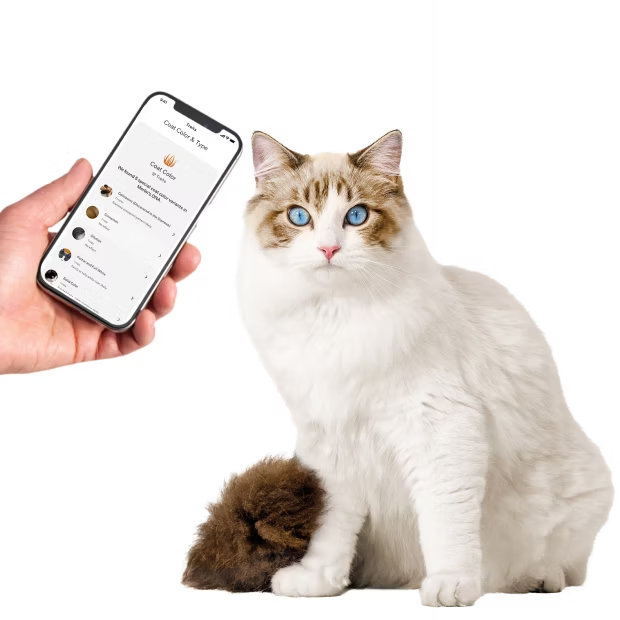
Our team of scientists gather information on your pet’s DNA to determine how the key gene variants, which are inherited from their mother and father, contribute to their physical features. Then we compile the results in an easy-to-understand report that breaks down the traits you’re likely to see in your furry friend.
Our team of scientists gather information on your pet's DNA to determine how the key gene variants, which are inherited from their mother and father, contribute to their physical features. Then we compile the results in an easy-to-understand report that breaks down the traits you're likely to see in your furry friend.